
Nosebleeds, also known as epistaxis, are a common ailment that can be precipitated by a variety of factors. They can range from minor to severe and can be caused by anything from dry air to a more serious underlying medical condition.
One of the most common causes of nosebleeds is dry air. When the air is dry, the inside of the nose can become dry and irritated, leading to cracking and bleeding. This is especially common in the winter months when indoor heating can dry out the air inside our homes. To combat dry air, it is important to use a humidifier and to keep the inside of your nose moisturized with a saline spray or ideally a gel (i.e Ayr Gel).
Another common cause of nosebleeds is trauma to the nose. This can happen from picking your nose, blowing your nose too hard, or from an injury to the nose. If you experience a nosebleed after an injury, it is important to seek medical attention to rule out any serious damage.
In some cases, nosebleeds can be caused by an underlying medical condition. High blood pressure, blood clotting disorders, and certain types of cancer can all cause nosebleeds. If you have frequent or severe nosebleeds, it is important to see an Ear, Nose & Throat doctor for evaluation and to rule out any underlying causes.
To stop a nosebleed, it is important to remain calm and to lean forward slightly. Pinching the nose at the compressible lower half of the nose will help to stop the bleeding. Applying a generous amount of nasal decongestant spray such as Afrin can also help to constrict the blood vessels and stop the bleeding.
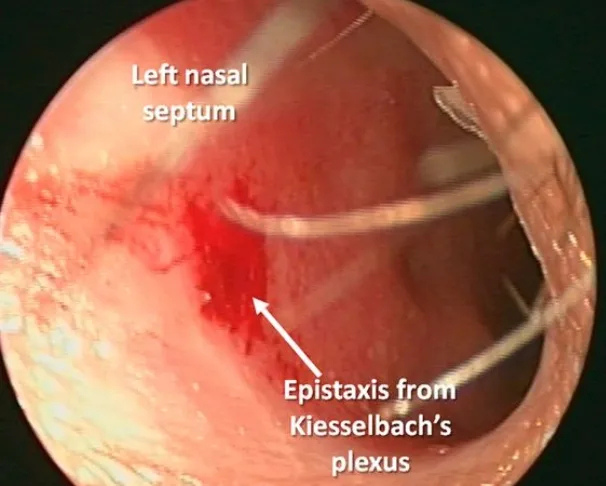
If you experience frequent or severe nosebleeds, it is important to see an Ear, Nose & Throat doctor for further evaluation. Your doctor may recommend a nasal spray or gel to help keep the inside of your nose moist and may perform an endoscopy to take a thorough look inside the nose for a source of bleeding.
In conclusion, nosebleeds are a common ailment that can be caused by a variety of factors such as dry air, trauma, or underlying medical conditions. It is important to see an Ear, Nose & Throat doctor if you experience frequent or severe nosebleeds, or if your nosebleeds are accompanied by other symptoms.
If you are exhibiting any of the symptoms above or suspect you have this condition, make an appointment with the Colorado Ear, Nose & Throat Group by calling 303-238-1366.