
Swallowing is an intricate process that involves coordination of nerve signals to the muscles of the throat and esophagus. Most individuals don't notice the swallowing process until an issue arises causing difficulty swallowing - dysphagia, or painful swallowing - odynophagia. There are many reasons swallowing function can become impaired. One reason, particularly common in older adults, is a Zenker's diverticulum.
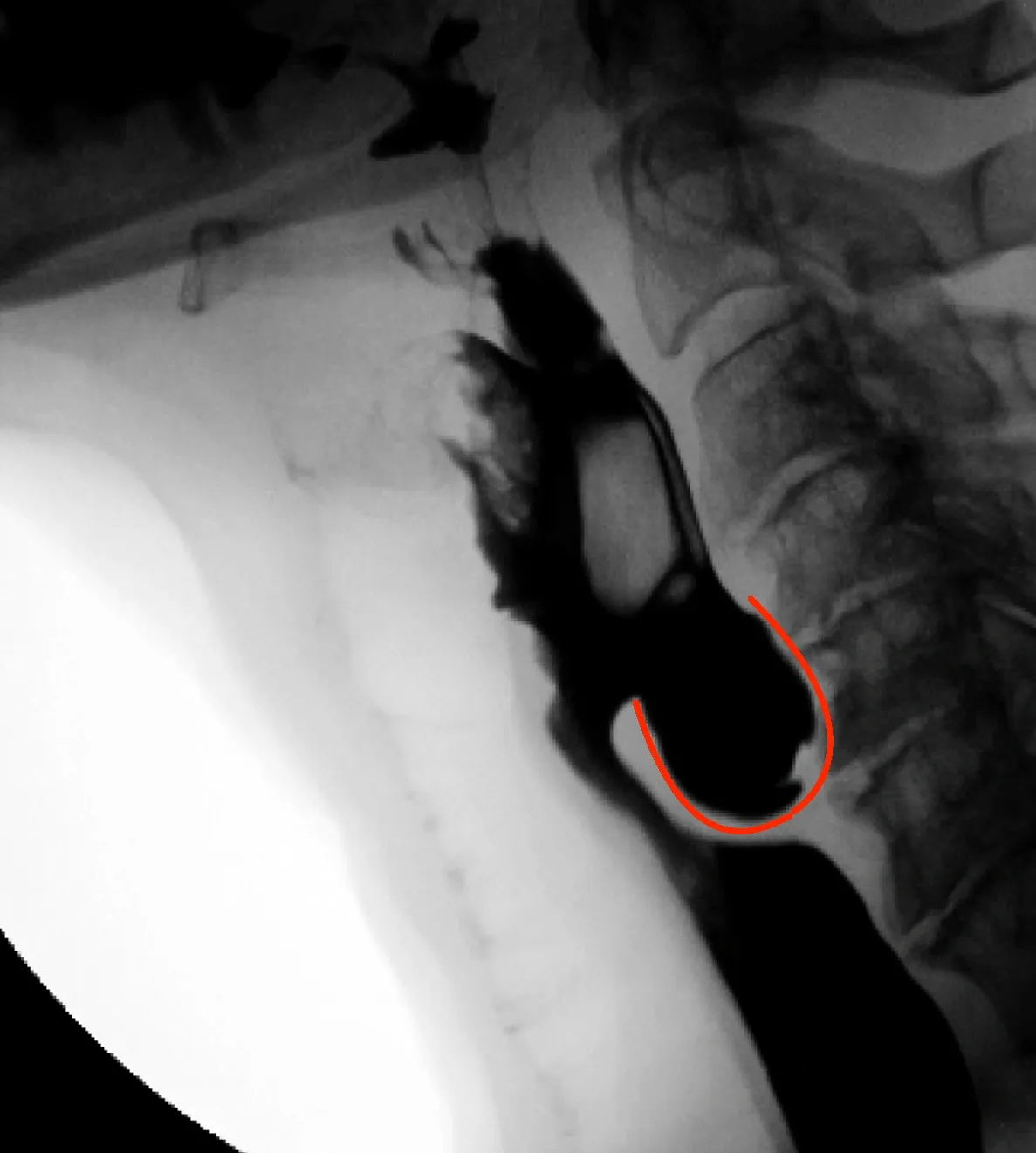
A Zenker's diverticulum is a benign, relatively rare condition that can impair ones ability to swallow. In this condition a pouch forms around the cricopharyngeus muscle, which is overly tense. This can lead to a sensation of tightness in the throat, difficulty swallowing, and even regurgitation of previously ingested food!
Diagnosis of Zenker's Diverticulum
When evaluating you, your doctor will start by discussing your symptoms and learning more about your history and overall health. Your doctor may perform a procedure known as a flexible laryngoscopy. During this a millimeters-wide camera is used to look at the inside of the throat. Additionally your doctor may obtain a swallow study, or esophagram which is often able to diagnose this condition.
Treatment of Zenker's Diverticulum
If you are asymptomatic or have mild, infrequent symptoms, you may be advised to take a watch-and-wait approach first. However, when more severe your doctor may discuss surgical options depending on a number of factors - including size of the pouch, overall health and ability to tolerate anesthesia.
The only treatment that can cure a Zenker's diverticulum is a surgical intervention, which relieves symptoms and improves the quality of life. Presently, there aren't any medications that treat the condition.
Often your surgeon will offer minimally invasive, endoscopic repair of the Zenkers diverticulum. In this surgery, the pouch is visualized through the mouth using lighted instruments and cameras and the wall separating the pouch from the normal food passage - the esophagus - is divided, no longer allowing food to get caught.
Patients will often stay overnight and go home the day after surgery.
If you are exhibiting any of the symptoms above or suspect you have the condition, make an appointment with the Colorado Ear, Nose & Throat Group by calling 303-238-1366.